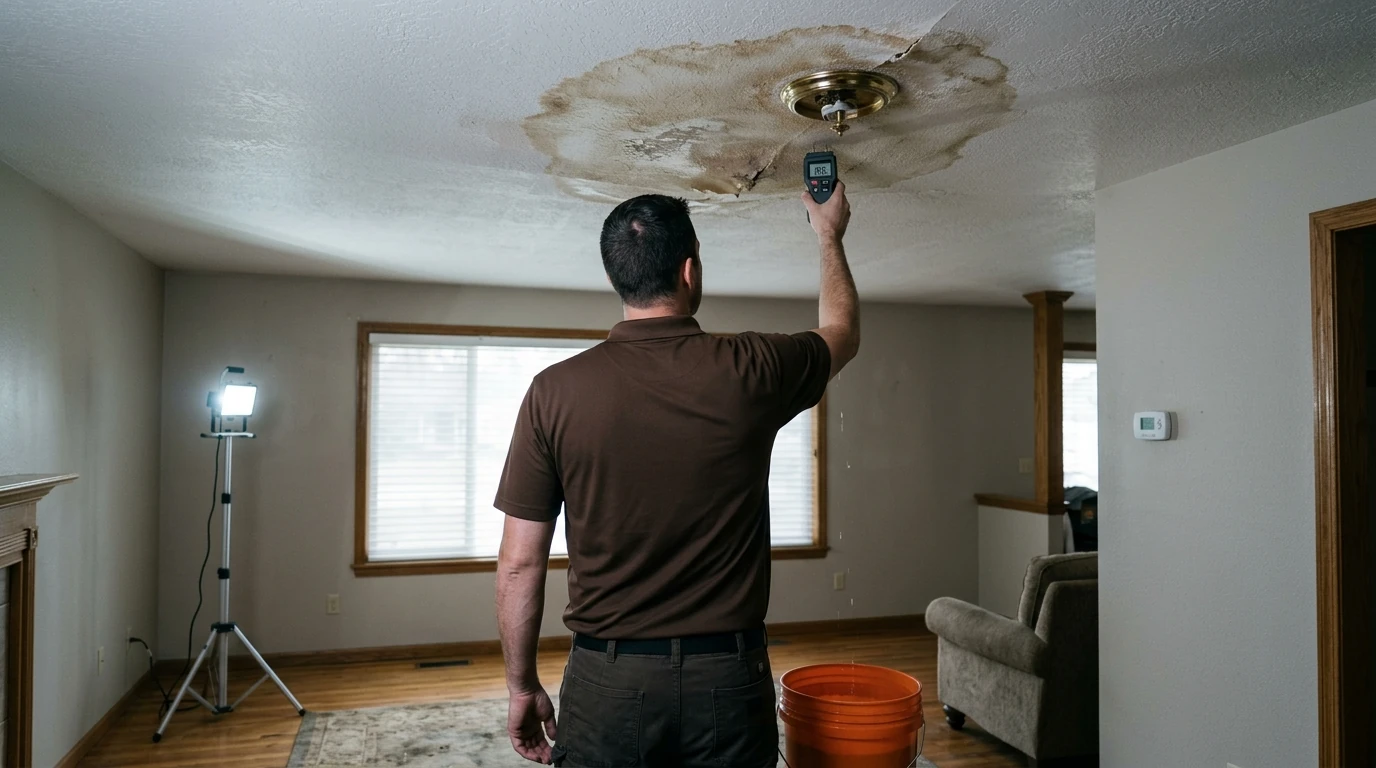
TL;DR: A ceiling leak in Meridian almost always traces to one of two sources: an upstairs bathroom or supply line (a plumbing issue) or the roof and attic during rain or snowmelt (a roofing issue). Shut off power to any fixture near the wet spot, catch the drip in a container, and call a 24/7 water damage restoration company right away, even before the source is fixed, so drying starts before the drywall and framing start growing mold.
If a brown stain is spreading across your bedroom or living room ceiling right now, call Idaho Disaster at (208) 713-3346: a 24/7 IICRC-certified technicians water damage crew that can get a moisture reading on the problem today, even on a weekend. A sagging, wet ceiling is not a wait-and-see repair. Drywall holds water like a sponge, and once it’s saturated it can pull away from the joists with no warning. Get everyone clear of the room, then work through the two questions below.
Is the Leak Coming From Plumbing or From the Roof?
The fastest way to narrow down who to call is tracing the leak to its source: a bathroom or supply line above means a plumbing problem, while a leak that only shows up during or after rain or snowmelt points to the roof or attic.
If the stain sits directly under an upstairs bathroom, laundry room, or kitchen, suspect a failed supply line, a cracked drain pipe, or an overflowing tub or toilet. This is Category 1 (clean) water if it’s a fresh supply-line break, but it degrades fast once it sits inside wet drywall and insulation. A toilet overflow with urine but no feces is Category 2 (gray) water; anything from beyond the trap, or a toilet overflow with feces, is Category 3 (black) water and needs to be treated as contaminated. In any of these cases, you need both a licensed plumber to stop the source and a restoration company to dry and test the ceiling cavity.
If the leak only shows up during a storm or as snow melts off the roof, the water is coming from outside, through flashing, a damaged shingle, an ice dam, or a clogged gutter backing water under the roofline. That water typically starts clean but picks up contaminants as it travels through insulation and old drywall, so don’t assume it’s harmless just because it started as rain. This situation needs a roofer to find and seal the entry point, plus a restoration crew to dry the attic insulation and ceiling assembly before mold sets in. Our storm damage restoration team handles that second half of the job locally.
Either way, do not wait for the plumber or roofer’s appointment before calling someone to start drying. The water sitting inside your ceiling cavity does damage on its own timeline, not the repair schedule.
What Should You Do in the First 10 Minutes?
Shut off power to any light fixture, fan, or outlet near the wet ceiling before you do anything else. Water and electrical wiring inside a ceiling cavity is a shock and fire risk, and it’s not worth testing.
Next, move furniture and anything valuable out from under the wet spot, and set a bucket or trash can to catch the drip. If the ceiling is visibly bulging or sagging, don’t stand directly under it and don’t poke a hole in it yourself unless you know how to safely relieve a pocket of trapped water, a wrong move there can bring a chunk of soaked drywall down on you. If you can safely access the source, shut off the water supply to the fixture above (the stop valve under the sink or behind the toilet) or the home’s main shutoff if you can’t isolate it.
Take photos of the stain, the drip, and any standing water before you clean anything up. Insurance adjusters and restoration estimators both rely on that early documentation, and it protects your claim if coverage questions come up later. For the fuller first-day checklist, see What To Do in the First 24 Hours After Water Damage.
What Happens When You Call a Restoration Company?
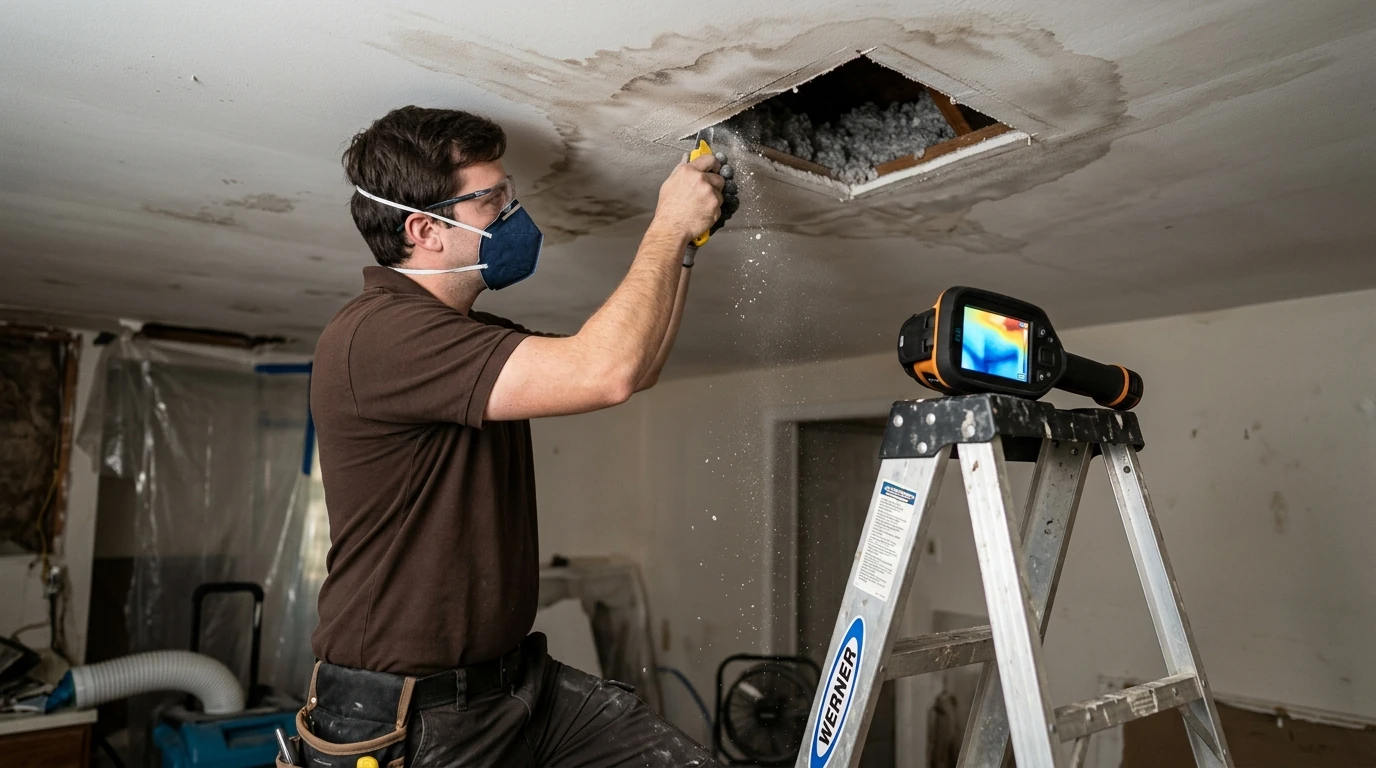
A restoration crew will ask a few quick questions on the phone, source of the leak if you know it, how long it’s been active, and whether the ceiling is sagging, then dispatch a technician with moisture-detection equipment. On arrival, they use a moisture meter and sometimes a thermal camera to map how far the water has traveled through the ceiling, walls, and insulation, since ceiling leaks almost always spread further than the visible stain suggests.
From there, the crew sets containment, places air movers and a dehumidifier, and removes any drywall or insulation that’s too saturated to dry in place, this is standard practice under the IICRC S500 water damage standard. If the ceiling drywall needs to be cut out and rebuilt, that work is handled separately as a repair, which is where a ceiling water damage repair specialist comes in once drying is complete. If you’re not sure where the leak is even coming from, a water leak detection inspection can pinpoint it before more damage happens.
If you’ve already filed a homeowners insurance claim or are deciding whether to, know that most policies cover sudden, accidental water damage from a burst supply line, but they generally exclude damage from a leak that’s been dripping for weeks due to neglect. Our guide on whether homeowners insurance covers water damage walks through what’s typically covered and what documentation protects the claim.
A ceiling leak rarely stays a small problem once drywall and insulation are wet. The sooner drying starts, the less of the ceiling, and the budget, ends up needing to be replaced. Call Idaho Disaster at (208) 713-3346 for an inspection, or start with the water damage restoration page to see how the drying process works.
About Idaho Disaster
The company is an IICRC-certified technicians water damage restoration team founded in 2026 and based in Meridian, Idaho, serving the Treasure Valley including Boise, Nampa, Caldwell, and Eagle. Its technicians hold IICRC Water Damage Restoration (WRT) and Applied Structural Drying (ASD) certifications and work 24/7, handling water damage restoration, emergency plumbing coordination, storm damage, and fire and smoke damage restoration across the region.