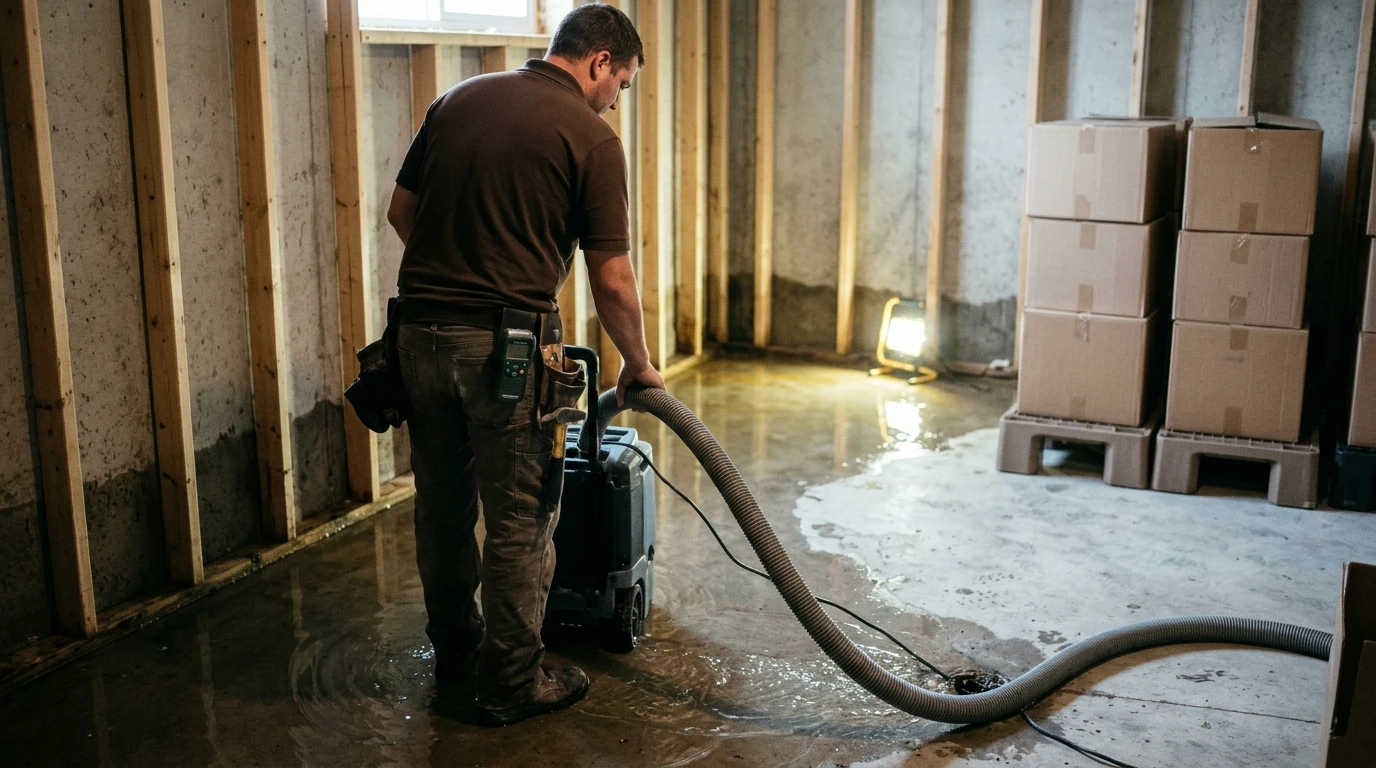
TL;DR: For a flooded basement in Meridian, shut off the water source if you can reach it safely, then call a 24/7 water damage restoration crew, not a general plumber, unless the issue is an isolated, still-active leak. Restoration crews extract standing water, pull moisture readings, and start structural drying the same visit. Mold can begin growing on wet drywall and framing within 24 to 48 hours, so the call matters more than the cleanup method.
If you just walked downstairs to wet carpet in a Meridian basement, maybe from a sump pump that gave out during spring runoff, a water heater tank that split overnight, or pressurized irrigation water pushing through an older foundation near downtown Meridian, you’re probably standing at the top of the stairs trying to figure out who actually handles this. A plumber stops the water. A restoration company handles the water that’s already on your floor, your drywall, and under your baseboards. Most flooded basements need both, but the order matters.
Who should I call first for a flooded basement in Meridian?
Call a water damage restoration company before anyone else, as long as the active water source is something you can shut off yourself (the sump pump breaker, the water heater valve, the home’s main shutoff). Restoration crews that answer calls 24/7 and carry IICRC Water Damage Restoration Technician (WRT) training can start extraction and set drying equipment the same visit, which matters because the clock on structural damage and mold growth starts the moment the water hits your framing.
The exception: if water is still actively flowing from a source you can’t stop (a split supply line behind a finished wall, for example), call a plumber first to kill the source, then call the restoration crew to deal with what’s already standing. Doing it in the wrong order just means paying someone to dry a basement that’s still filling.
When is it a plumber, and when is it 911 or the utility company?
It’s a plumber call when the leak is isolated and you can’t reach a shutoff yourself, like a corroded supply line inside a wall cavity. It’s a 911 or utility call immediately, before anything else, if water is pooling near an electrical panel or outlets, or if you smell gas near the water heater.
Most Meridian basement floods fall into a few patterns, and each one points you somewhere different:
- Water heater tank failure: usually a clean, sudden source. Shut off the cold supply valve at the tank, then call a restoration crew. This is typically Category 1 clean water, though it degrades fast once it sits on carpet or drywall.
- Sump pump failure during spring runoff: common in Treasure Valley basements that sit low relative to the water table. Shut off the pump’s breaker if water is still rising, then call for extraction. Note this one for the insurance section below.
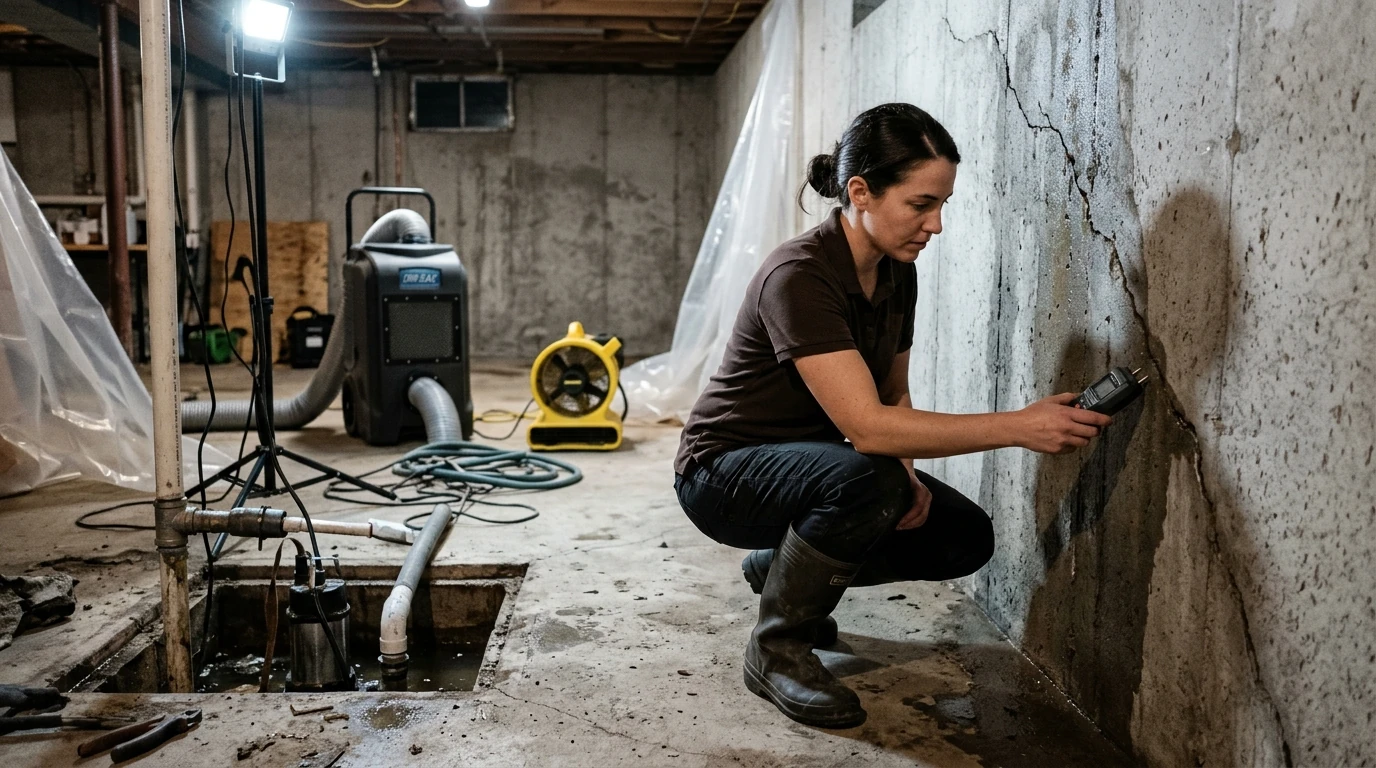
- Irrigation or groundwater seepage through foundation cracks: common in older basements near downtown Meridian without modern perimeter drainage. This is hydrostatic pressure pushing groundwater in, classified as Category 2 (gray water), and it usually needs more than a wet-vac.
- Sewage or floor drain backup: always Category 3 (black water). Don’t touch it without gloves, and don’t run a household shop vac through it. This needs a restoration crew with containment and antimicrobial treatment, per the IICRC S500 standard.
Will insurance cover a flooded basement in Meridian?
Most standard homeowners policies cover a sudden water heater failure, since it’s an accidental, sudden loss, but they do not automatically cover a sump pump failure or a sewer backup. Those two require a separate water backup (sewer/sump) endorsement added to your policy; without it, the claim is often denied no matter how clean the water was. Check your declarations page for that specific line before you assume coverage. Our guide to what homeowners insurance actually covers for water damage breaks down the distinction in more detail, and keeping photos and a timeline from the first hour protects whichever claim you end up filing.
What actually happens when you call?
The first call is short: where the water’s coming from, whether the source is stopped, roughly how much standing water, and how long it’s been sitting. Have your shutoff status and the approximate start time ready, since both affect the drying plan.
On arrival, a crew maps moisture with a meter (not a guess), extracts standing water with truck-mounted or portable pumps, and pulls wet baseboard or drywall where the category of water calls for it rather than drying it in place. Air movers and a dehumidifier go in before the crew leaves, and documentation (photos, moisture readings, a written scope) gets built alongside the physical work, not after it, since that paperwork is what an adjuster will ask for.
What should I do while I wait, and how fast does mold actually start?
Mold can begin colonizing wet drywall and framing within 24 to 48 hours of a flood, according to the EPA’s mold cleanup guidance, so waiting a few days to “see if it dries out on its own” is the single most expensive mistake in a basement flood.
While you wait for a crew: move boxes and furniture off the wet floor, don’t run a shop vac through anything that smells like sewage, open a basement window if it’s safe and the weather allows it, and photograph the water line on the walls before anything gets moved. Ready.gov’s flood safety guidance also covers when to avoid standing water entirely, particularly around outlets or if the basement houses an electrical panel. If the first 24 hours is more your concern than who to call, our first-24-hours water damage checklist walks through the same window in more depth.
A flooded basement rarely waits for business hours, and the damage compounds for every hour the water sits untouched. Call Idaho Disaster at (208) 713-3346 to get extraction and drying equipment moving the same day, or start with the basement flooding cleanup page to see what the process looks like before you pick up the phone.